
Having just returned from a work trip to Dubai and given the ongoing developments I wanted to take the time to write something based on the wider implications of military conflict in the region, and specifically how this relates to global shipping and energy production in the Gulfs area. We are still in the early days and yet the feel the implications but in the era of global uncertainty, here we have yet another hurdle to jump. As a Master mariner with experience of operating in this region on offshore projects, I have attempted to analyse the wider implications as well as the more obvious effects on the flow of global trade and safety of navigation.
The Strait of Hormuz remains one of the most strategically sensitive maritime corridors in the world. Approximately 20% of globally traded crude oil and a substantial proportion of LNG exports transit this narrow waterway daily. For the Gulf Cooperation Council (GCC) states, particularly Saudi Arabia, the UAE and Qatar, uninterrupted maritime access is fundamental not only to export revenue but to offshore project continuity.
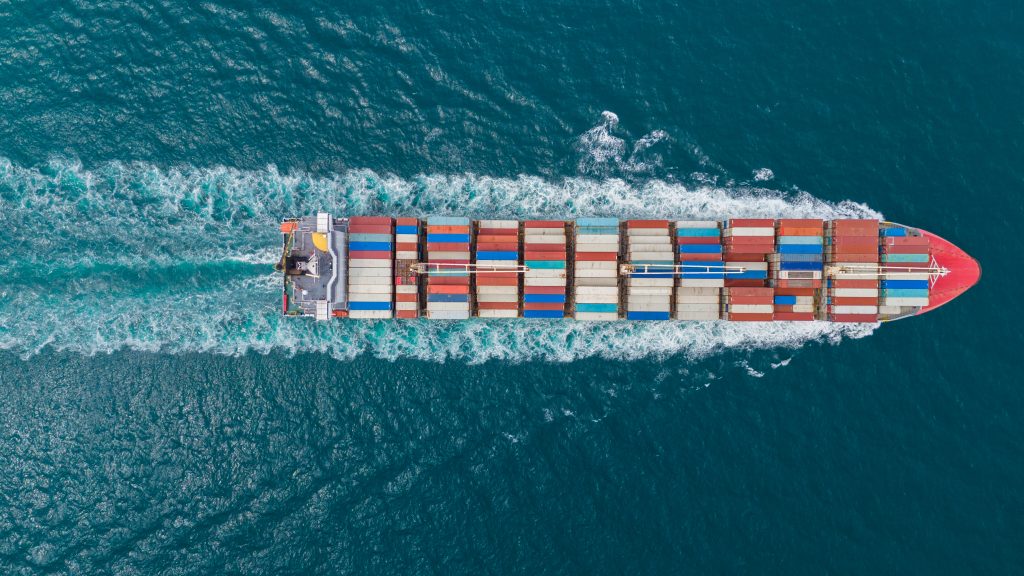
However, the modern maritime and offshore energy system does not require physical closure of the Strait to experience material disruption. As has been published by ‘Lloyds List Intelligence, by 1800 on March 1st, 2026, tanker traffic had dropped from 56 on Friday 27th February, to just seven small tankers and one gas carrier. Three of these were reported to be shadow fleet tankers. Following suit, many container shipping companies have now made the decision to halt transits through the straits given the heightened risk environment.
In today’s risk environment, insurance activation, underwriting caution, contractual exposure, and logistical constraints can collectively produce the operational equivalent of closure, even while vessels continue to transit.
Functional Closure: When Insurance Moves First
The maritime sector responds to risk faster than geopolitics resolves it. ‘Skuld’ has already issued their assureds with a notice of cancellation of War Risk Cover. It is likely that other clubs may follow.
The designation of a high-risk area and the activation of Additional War Risk Premiums (AWRP) can materially alter voyage economics overnight. Hull & Machinery (H&M) underwriters, P&I clubs, and insurers may:
- Impose voyage-specific premiums
- Require pre-declaration of transit
- Apply revised trading warranties
- Limit cover for certain ports or anchorages
- Demand enhanced security protocols
Charter parties typically contain war risk clauses permitting owners to refuse or deviate from entering areas deemed unsafe. This may introduce immediate commercial friction between owners and charterers. However, in this case many vessels will effectively be trapped in the Persian Gulf without sufficient insurance cover.
Even where vessels continue to trade, the cost of risk shifts.
Freight markets will surely respond accordingly. Tanker rates will spike due to perceived exposure, as well as a reduced supply of vessels, while offshore support vessels face more complex allocation decisions. Operators with fleet concentration in the Gulf must reassess exposure modelling across multiple assets simultaneously.
In effect, risk pricing can create “functional closure”, not necessarily by blockade, but by cost and liability redistribution.
Marine Warranty Surveyors: Elevated Thresholds in Elevated Risk
While tanker traffic captures attention, offshore project exposure is more nuanced, and potentially more fragile.
Marine Warranty Survey (MWS) providers operate within structured risk frameworks based on defined environmental, technical, and operational assumptions. Escalation in regional threat levels will force re-evaluation of those assumptions.
Increased war risk conditions may lead to:
- Reassessment of tow route approvals for rig moves.
- Revised weather window tolerances if naval routing constraints apply.
- Additional escort tug requirements.
- Enhanced contingency planning.
- Additional hold points prior to heavy lifts
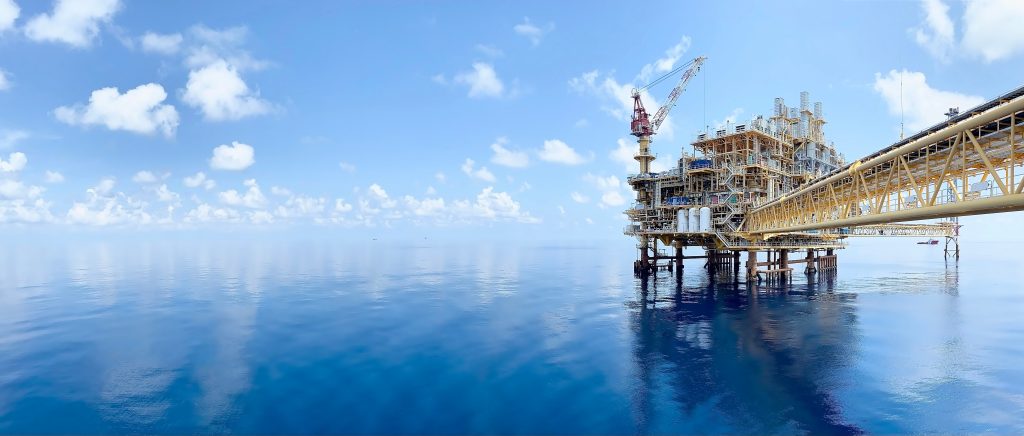
Tow approvals for jack-ups in the region may require a re-submission of method statements. Insurers backing the warranty may themselves impose revised risk acceptance thresholds given the new operating environment. Offshore structures are undoubtedly highly exposed, with no dedicated air defence systems, they will become reliant on other means should they be targeted.
The technical feasibility of a move does not now guarantee approval under revised risk appetite.
In large-scale offshore campaigns, the delay of a single rig move can cascade through an entire drilling sequence. Standby day rates for rigs, support vessels, and specialist contractors quickly accumulate.
Marine warranty conservatism, while prudent, carries schedule consequences that must be contractually absorbed somewhere in the chain.
Rig Moves and Drilling Campaign Exposure
Drilling programmes are tightly sequenced logistical operations. A modern jack-up move within the GCC may involve:
- Anchor handling vessel coordination
- Weather routing and tidal planning
- Port clearances
- Insurance endorsements
- Marine warranty approval
- Charterparty compliance
In an elevated war risk environment, additional variables emerge:
- Restrictions on specific transit corridors
- Naval reporting requirements
- Insurance refusal to cover certain anchorages
- Revised limits on unmanned tow duration
- Potential exclusion of cover for hostile acts
If airspace closures or security alerts reduce port functionality, safe havens become limited. The availability of anchor handling tonnage may tighten if owners reallocate vessels away from perceived hotspots.
The cumulative effect is increased programme fragility and potential for major operational delays.
Where development agreements contain liquidated damages for delayed drilling milestones, disputes become foreseeable. Questions arise regarding:
- Whether war risk premium escalation constitutes force majeure
- Whether marine warranty refusal constitutes prevention
- Allocation of increased escort or standby requirements
- Off-hire claims for support vessels delayed by revised routing
In such environments, documentation quality and contemporaneous risk assessment records become critical in later dispute resolution.
Subsea Construction and DP Operations Under Security Constraints
Subsea installation campaigns, including pipelay, cable lay, IRM operations, and heavy lifts are equally exposed to this regional instability.
DP vessels operating in proximity to security sensitive zones face heightened operational complexity:
- Increased NAVAREA warnings
- Restricted manoeuvring corridors
- Potential for major GNSS interference or spoofing.
- Heightened naval traffic density
- Mandatory security reporting protocols
GNSS degradation or spoofing presents a specific technical concern. While DP Class 2 and 3 vessels maintain redundancy across reference systems, degraded satellite signals may increase reliance on alternative position references such as taut wire or laser systems, each with their own operational constraints. Many vessels in the region are already reporting major GNSS degradation. For DP vessels operating within the confines of ‘Activity Specific Operating Guidelines’ (ASOG) and other agreed procedures, this becomes problematic.
Marine warranty surveyors may respond by:
- Requiring additional DP proving trials
- Imposing operational watchkeeping restrictions
- Mandating enhanced redundancy verification
- Applying tighter environmental limits and reducing the operating windows.
Each incremental restriction will reduce operational efficiency and increase project costs. The question will be who is going to absorb these.
Who bears the cost of war risk escalation and operational constraint?
Under fixed-price EPC structures, contractors may be required to absorb increased insurance premiums unless explicitly recoverable. Where marine warranty delays prevent scheduled operations, causation analysis will be complex.
Similarly, with crew logistics being disrupted due to the widespread airspace closures, contractors may argue force majeure while clients will argue foreseeable regional risk.
In such disputes, contemporaneous risk assessments, underwriter correspondence, warranty survey conditions, and voyage approvals may form the evidentiary backbone of later expert analysis. War risk does not simply disrupt operations; it will likely lay the groundwork for future disputes.
Airspace Closure and the Crew Logistics Constraint
Seafarers are the often-overlooked dimension of regional conflict and in this case, the aviation disruption.

Airspace closures and flight cancellations into and out of parts of the GCC complicate crew mobilisation for offshore projects. Modern offshore energy operations rely on highly specialised, internationally mobile personnel such as:
- DP operators
- Saturation diving teams
- ROV supervisors
- Construction managers
- Marine crew
- OEM technicians
Restricted flight corridors may increase transit times, create visa complexities, and reduce redundancy in crew change planning.
The operational consequences include:
- Extended tour lengths
- Fatigue accumulation
- Reduced availability of relief personnel
- Increased reliance on regional labour pools
- Compromised medevac contingency planning
Fatigue is a well-documented risk factor in maritime incidents. Extended rotations particularly in high-alert environments elevate human performance risk.
From a risk management perspective, crew logistics is not peripheral. It is integral to maintaining operational safety in elevated threat environments.
Caught in the Middle: The Seafarers Enabling Global Trade
Amid insurance recalculations and contractual analysis, the individuals most directly exposed are often the least visible.
Merchant seafarers, offshore crews, and marine support personnel are civilians operating in a strategically sensitive corridor. They did not sign up to become geopolitical instruments.
Yet they continue transiting narrow straits, maintaining DP watches, executing rig moves, and completing subsea installations while regional tension escalates.
If a cruise vessel carrying thousands of passengers were caught in the same environment, global reaction would likely be immediate. Merchant vessels rarely command similar attention, despite underpinning global energy security and trade continuity.
Risk modelling frequently focuses on cargo value and hull exposure. The human dimension, while central to safe operations, is often commercially absent.
As regional tensions rise, the welfare, fatigue management, and psychological stress borne by crews deserves explicit recognition. Vessel crews have already been caught up in this conflict, either as direct targets or as unintended victims of broader regional escalation. These updates provided by the United Kingdom Maritime Trade Operations (UKTMO) Centre serve as a reminder of those often forgotten.
A System of Interdependent Risk
Modern offshore energy delivery is a tightly coupled system encompassing many different actors:
Insurance markets
Marine warranty approvals
DP operations
Crew logistics
Charter party terms
EPC risk allocation
Energy export economics
Disruption in one domain transmits quickly into others and we will likely see this in the coming days and possibly weeks.
The Strait of Hormuz need not be physically blocked to constrain energy flows or offshore project delivery. Insurance activation, marine warranty conservatism, altered routing, airspace closures, and contractual ambiguity will all impose friction on the system.
For vessel owners, contractors, insurers, and energy companies, the challenge lies not only in operational response but in documentation, risk allocation clarity, and dispute preparedness.
Technical Risk, Contractual Exposure, and Expert Scrutiny
We have seen before that periods of elevated war risk often generate complex disputes months or years after the immediate crisis subsides.
Typical areas requiring technical and expert analysis include:
- Whether a master’s decision to deviate was reasonable under war risk clauses
- Whether marine warranty conditions were proportionate and technically justified
- Whether DP operations were conducted within class and FMEA parameters under degraded GNSS conditions
- Allocation of delay attributable to insurance refusal versus operational impracticability
- Causation analysis in rig move delays or subsea installation suspension
Clear, technically grounded assessment will be essential.
For long-duration campaigns, even small reductions in effective working windows compound schedule risk. Where installation vessels operate on lump-sum EPC contracts, margin exposure will increase rapidly.
Conclusion
War risk in the Gulf is not confined to headlines about tankers. It permeates insurance markets, offshore project sequencing, marine warranty approvals, crew logistics, and contractual liability structures.
It will expose the fragile nature of highly efficient but tightly interconnected systems.
But at its centre are civilian maritime professionals continuing to enable global trade and energy supply in an increasingly complex environment.
For stakeholders engaged in offshore energy, shipping, insurance, and project finance, the current climate underscores the importance of technical rigour, contractual clarity, and independent expertise.
MOR Maritime Consultants provides technical advisory and expert witness services across marine operations, Dynamic Positioning, offshore construction, and maritime dispute resolution. In periods of heightened regional risk, early technical engagement can materially reduce downstream exposure.
The Strait of Hormuz may remain physically open. Whether it remains operationally frictionless is a far more complex question.
Article written by – Ross McBurnie MNI ASOMWS – Master Mariner- Founder of MOR Maritime Consultants